
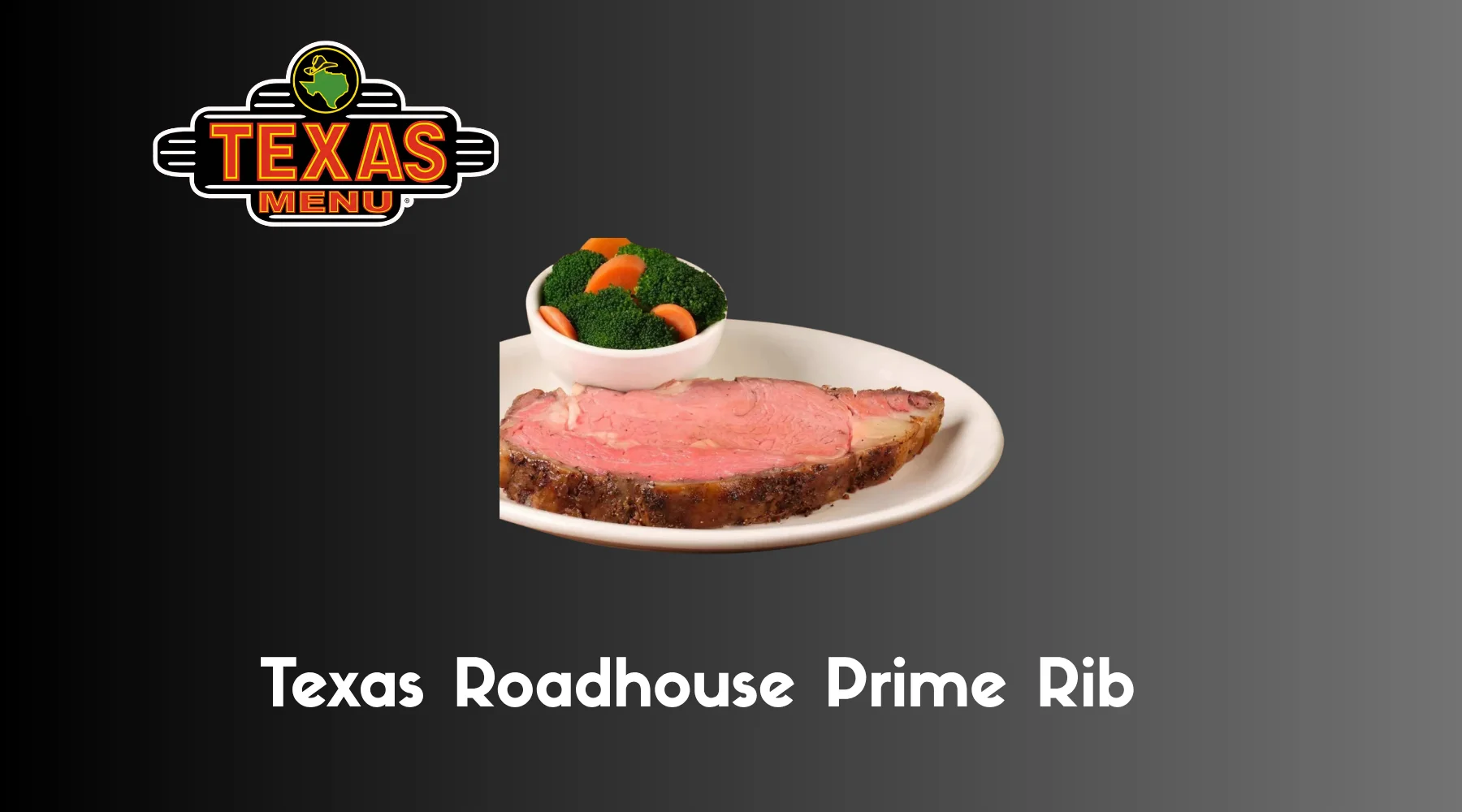
Texas Roadhouse is known for its honky‑tonk atmosphere, buckets of peanuts and baskets of warm rolls, but the main draw remains the steaks. Among those steaks, the prime rib stands out because it isn’t cut to order on the grill like most other cuts. Instead, it’s a slow‑roasted ribeye served in slices. In 2026 this dish is both beloved and debated: fans praise its tenderness and value while critics say other steaks deliver more seared flavor.
This guide provides a human‑researched overview of Texas Roadhouse prime rib, using credible sources and diner feedback.
What is Texas Roadhouse Prime Rib?
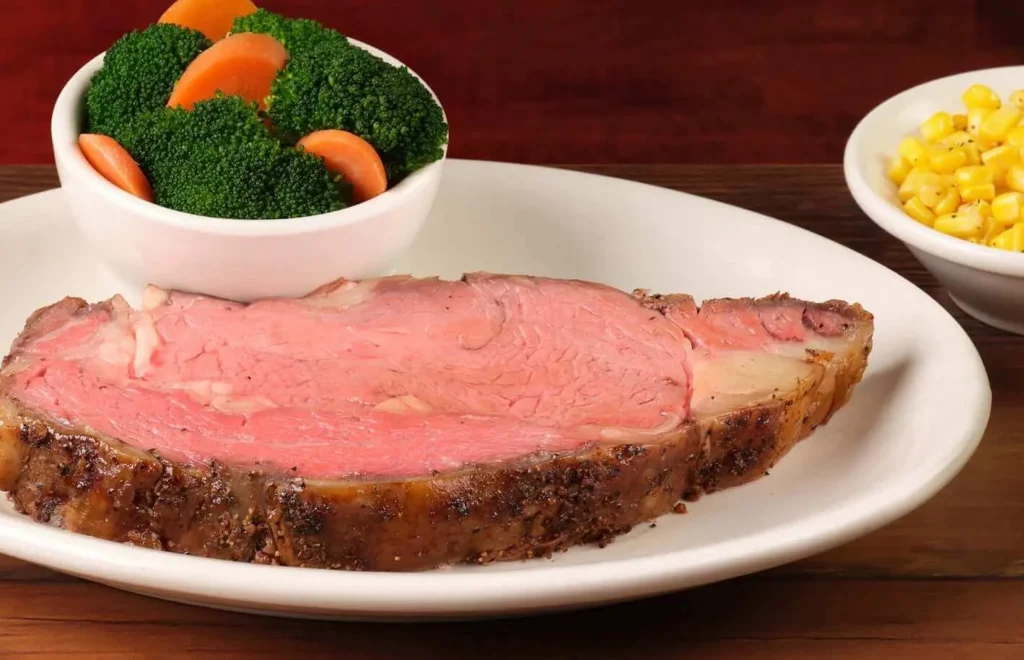
Texas Roadhouse describes its prime rib as a “flavorful ribeye steak slow‑roasted to perfection with choice of two sides”. Prime rib is essentially a ribeye roast, cut from the cow’s rib section and well marbled, which makes for a juicy, tender bite when cooked properly. At Texas Roadhouse, a whole ribeye loin is rubbed with a mixture of garlic, soy sauce, salt, pepper and herbs and left to marinate for up to 24 hours.
A former kitchen manager explained that the roast is seared at high heat and then slow roasted at a lower temperature before resting, allowing the juices to redistribute. Because the restaurant roasts whole “logs” of prime rib in advance, the center slices are naturally rarer while the ends develop a bit of bark; diners can request the slice they prefer.
Prime Rib
- 12oz – $23.99 | 950 Cal
- 14oz – $26.49 | 1040 Cal
- 16oz – $28.99 | 1260 Cal
This preparation differs from other steaks on the menu. Whereas sirloins or ribeyes are cut and cooked to order over a hot grill, prime rib is prepared ahead of time and carved to order. That slow roasting process yields consistent tenderness but means the meat lacks the crust created by direct grilling. When you order prime rib, it’s served with au jus and horseradish or creamy horseradish and comes with your choice of two “legendary” sides.
Common sides include baked or sweet potatoes, seasoned rice, fresh vegetables, salads and mac and cheese. Diners can also pay a small upcharge to top the prime rib with sautéed mushrooms, onions or blue cheese crumbles, or add a “sidekick” such as grilled shrimp or ribs for surf‑and‑turf flair.
Portions, prices & value
Texas Roadhouse offers its prime rib in 12‑, 14‑ and 16‑ounce portions. Pricing depends on location, but independent reports suggest the smallest cut runs about $24–26, the 14‑ounce portion is around $27–28, and the 16‑ounce is around $29–30. In a 2026 price comparison, a 14‑ounce prime rib cost $27.49, or roughly $1.96 per ounce, and many diners report paying roughly $24.99 for 12 oz and $29.99 for 16 oz.
These prices include two sides and unlimited rolls. For context, Logan’s Roadhouse charges about $31.99 for a 13‑ounce prime rib and Outback Steakhouse’s 12‑ounce prime rib is just under $30. More upscale steakhouses frequently charge over $40 for a comparable cut, so Texas Roadhouse offers an attractive value per ounce.
Flavor & texture: praise and criticism
Texas Roadhouse’s prime rib has earned a loyal following. A Chowhound feature highlighting Reddit comments captures diners who say the prime rib is “always tender, flavorful and doesn’t break the bank”. Another commenter called it “the best bang for the buck prime rib”, while others marvel at getting a sizable slab of slow‑roasted beef plus sides and rolls for roughly $25. Fans praise the juicy interior, balanced marbling and savory rub, which incorporates garlic, liquid smoke and herbs. The gentle roasting process produces slices that are uniformly tender with a buttery mouthfeel.
There are, however, notable criticisms. Because the prime rib is roasted rather than grilled, it lacks the charred crust and smoky sear that steak purists crave. A Chowhound ranking placed prime rib at the bottom of Texas Roadhouse’s steak lineup, noting that the slow‑roasted roast “doesn’t compare to the well‑seasoned and seared flavor” of other cuts.
Tasting Table reported that some employees warn guests that the prime rib arrives pre‑cut and frozen, a compromise necessary at many locations that lack equipment for cutting large bone‑in roasts; this can lead to uneven cooking. Mashed also found that while most reviewers enjoy the dish, some diners complain that the liquid smoke flavor is too strong or that the meat is occasionally over‑ or under‑cooked.
These mixed opinions suggest the prime rib is best suited to diners who like slow‑roasted beef and are willing to trade a crispy crust for tenderness. Those seeking a caramelized, charbroiled steak may prefer Texas Roadhouse’s bone‑in ribeye or porterhouse. However, diners who know how to customize their order often report better experiences.
Preparation & customization tips
To get the most from your prime rib meal, consider these insider tips from seasoned diners and employees:
- Arrive early: Prime rib is prepared in limited quantities and can sell out nightly, so dining early increases the chance of getting your preferred size and doneness.
- Request your cut: Because the roast cooks unevenly, the center slices are rarer and the ends more well‑done. Ask for an “end cut” for extra crust or a center slice for rare meat.
- Choose lighter sides: Pair the rich prime rib with a salad or steamed vegetables to balance the meal.
- Add toppings: Order au jus and horseradish on the side and consider toppings like sautéed mushrooms, onions, blue cheese or a side of shrimp or ribs for a surf‑and‑turf upgrade.
Is it worth the price?
Evaluating value depends on both cost and satisfaction. For roughly $25–$30, diners receive a substantial portion of slow‑roasted ribeye, two sides and unlimited rolls. A 14‑ounce prime rib at $27.49 was found to be cheaper than Logan’s 13‑ounce cut at $31.99 and is available daily rather than only on weekends. Outback’s comparable portion costs closer to $30. Factoring in sides and rolls, Texas Roadhouse’s prime rib offers some of the best value per ounce among chain steakhouses.
That doesn’t mean it’s the best steak on the menu. Those who prioritise a charred crust or intense beefy flavor may find the bone‑in ribeye or porterhouse more satisfying, and quality can vary by location. Still, for many diners the combination of tenderness, portion size and price makes the prime rib a worthwhile indulgence. One customer summed it up as “pretty hard to beat for a chain”.
What’s new for 2026?
Texas Roadhouse continues to grow. News reports say the company plans to open about 20 new steakhouses in 2026 and is rolling out digital kitchen systems and pay‑at‑the‑table tablets across its restaurants. It is also testing region‑specific cocktails and mocktails to keep the menu fresh. Executives have pledged to keep prices reasonable, suggesting that popular dishes like prime rib will remain accessible despite rising costs.
Frequently asked questions
Texas Roadhouse serves prime rib in 12‑oz, 14‑oz and 16‑oz portions, each accompanied by two sides and free rolls.
Prices vary by region, but you can expect to pay about $24–26 for a 12‑oz portion, $27–28 for a 14‑oz portion and $29–30 for a 16‑oz portion.
Yes. Unlike some chains that reserve prime rib for weekends, Texas Roadhouse offers it daily while supplies last.
A ribeye loin is rubbed with garlic, soy sauce and herbs, marinated for up to 24 hours, seared at high heat and then slow roasted. The roast is carved to order and served with au jus and horseradish.
Yes. You can request an end cut or center slice to suit your preferred doneness, top your steak with sautéed mushrooms, onions or blue cheese, and add a sidekick of shrimp or ribs for a surf‑and‑turf combo.
Conclusion
Texas Roadhouse’s prime rib remains a highlight of the 2026 menu because it combines generous portions, a reasonable price and slow‑roasted tenderness. The 12‑, 14‑ and 16‑ounce cuts provide solid value compared with other chains, and fans appreciate the buttery texture and savory rub. Critics do point out the lack of a seared crust and uneven quality, but ordering early and requesting your preferred cut can improve the experience. As the chain expands and modernises in 2026, prime rib continues to offer a hearty slice of Texas hospitality without breaking the bank.