
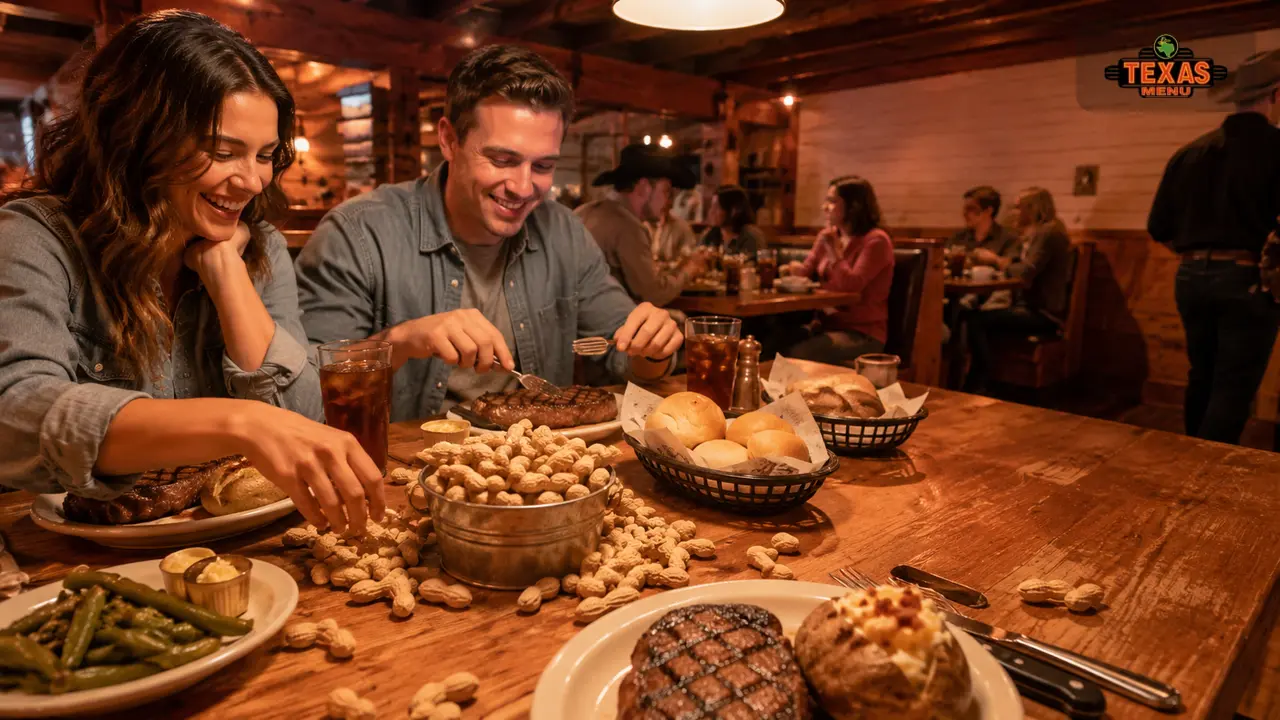
Walk into any Texas Roadhouse location and the first thing you notice is the sound. Country music fills the room. Servers move with energy. And somewhere on your table — or already on the floor around you — are peanuts. Texas Roadhouse peanuts are one of the most recognized elements of the entire brand identity. They arrive free, unlimited, and unannounced at every table before a single word is spoken to a server.
Many guests accept this tradition without questioning it. However, the story behind why Texas Roadhouse gives away free peanuts is actually fascinating. It reveals something important about how the restaurant thinks about hospitality, atmosphere, and the guest experience.
The Origin of Free Peanuts at Texas Roadhouse
Texas Roadhouse founder Kent Taylor introduced the free peanut tradition when the first location opened in Clarksville, Indiana in 1993. The decision was deliberate and strategic from the very beginning.
Taylor understood that guests waiting for a table or for their food to arrive become restless and impatient without something to occupy them. Providing unlimited free peanuts solved this problem elegantly. Guests had something to eat, something to do with their hands, and something to discuss with their table companions. The wait felt shorter because engagement replaced idle waiting.
Furthermore, the peanuts communicated something essential about the brand’s personality. They signaled immediately that Texas Roadhouse was not a formal, uptight dining environment. A restaurant that dumps peanuts on your table and encourages you to throw the shells on the floor is telling you clearly — relax, be comfortable, this is your kind of place. That message shaped guest expectations from the very first moment of every visit.
Why Throwing Shells on the Floor Is Encouraged
One of the most distinctive elements of the Texas Roadhouse peanut experience is the explicit permission — and encouragement — to drop shells directly onto the floor rather than collecting them in a container. This seems counterintuitive from a cleanliness perspective. However, the reasoning is thoughtful.
The shell-dropping tradition reinforces the casual, country-themed atmosphere that defines Texas Roadhouse. It signals that perfectionism and formality are not part of the experience. Guests who might feel anxious about making a mess in a restaurant are immediately liberated from that concern. The floor is already covered with shells. Yours are welcome.
Additionally, the peanut shells serve a subtle atmospheric function. The sound of shells underfoot as servers and guests move through the dining room creates an audio texture that contributes to the overall lively environment. Combined with country music and line-dancing servers, the crunching shells help build the sensory experience that makes Texas Roadhouse feel genuinely different from every other casual dining chain.
The cleaning process is managed through regular sweeping cycles throughout service. Staff trained in this specific cleaning approach maintain floor hygiene consistently without interrupting the dining experience for seated guests.
How Many Peanuts Does Texas Roadhouse Give Away
Texas Roadhouse does not publish an official figure for peanut consumption. However, independent estimates based on bucket sizes, table turnover rates, and location volume suggest that a busy Texas Roadhouse location goes through hundreds of pounds of peanuts weekly.
The chain operates over 700 locations nationally. At an estimated average of 200 to 300 pounds of peanuts per location per week, the total national peanut consumption across the system reaches tens of millions of pounds annually. This makes Texas Roadhouse one of the largest peanut-serving operations in American foodservice.
The peanuts are sourced through commercial foodservice supply channels and represent a meaningful line item in each location’s operating costs. However, Texas Roadhouse treats this cost as a core hospitality investment rather than an expense to minimize. Removing the peanuts would save money but damage the brand identity in ways that would cost far more than the peanuts themselves.
What Kind of Peanuts Does Texas Roadhouse Use
Texas Roadhouse serves roasted, salted peanuts in the shell. The peanuts are not flavored with additional seasonings beyond salt. They are not honey roasted, spiced, or coated. This simplicity is intentional.
Plain roasted salted peanuts are universally accessible — most guests enjoy them regardless of their usual snack preferences. They do not compete with the flavors of the meal to come and are satisfying without being filling. They are easy to eat without tools or napkins. Furthermore, the simple preparation keeps supply costs predictable at a national scale.
The peanuts arrive in small metal buckets or paper bags depending on the location. Guests can request additional peanuts at any point during their visit without any limit or charge. This unlimited availability reinforces the generosity message that the entire Texas Roadhouse hospitality philosophy is built on.
The Peanut Allergy Policy — Critical Information
Texas Roadhouse peanuts create a serious safety consideration for guests with peanut allergies. Peanut allergies are among the most severe food allergies in terms of potential reaction intensity. Texas Roadhouse handles this reality with a specific policy that guests with allergies must understand before visiting.
The restaurant openly acknowledges that peanuts are present throughout its dining rooms. Shells on the floor, peanut dust in the air, and peanut contact with tables and surfaces are all inherent characteristics of the Texas Roadhouse environment. These conditions make the restaurant genuinely unsuitable for guests with severe peanut allergies regardless of individual food ordering choices.
Texas Roadhouse cannot guarantee a peanut-safe environment for any guest. The allergen exposure risk extends beyond the food on the plate to the ambient environment of the dining room itself. Guests with known peanut allergies — particularly those who carry epinephrine auto-injectors or have previously experienced anaphylactic reactions — should carefully consider whether dining in a Texas Roadhouse is appropriate for their specific medical situation.
For guests with mild sensitivities rather than severe allergies, informing the host and server immediately upon arrival allows the staff to take reasonable precautions including cleaning the table area thoroughly before seating. However, these precautions cannot eliminate all risk in an environment where peanut shells are actively present on the floor and surfaces throughout service.
Full allergen information for every menu item is available on the Texas Roadhouse allergens page. However, the environmental allergen risk from peanut presence in the dining room extends beyond what any ingredient-based allergen guide can fully address.
Peanuts as a Brand Differentiator
The free peanut tradition contributes to Texas Roadhouse’s brand identity in ways that go beyond simple hospitality. It is one of the most immediately memorable and frequently mentioned elements of the dining experience across social media, reviews, and word-of-mouth recommendations.
Guests who have never visited Texas Roadhouse are often told about the peanuts before they visit for the first time. This pre-visit storytelling creates anticipation and curiosity. The peanut experience delivers on that curiosity immediately upon arrival. Consequently, the peanuts contribute to both the new guest acquisition process and the ongoing brand loyalty of returning guests.
Food writers, restaurant reviewers, and casual dining researchers consistently cite the peanut tradition alongside the fresh-baked rolls as the two most distinctive experiential elements of a Texas Roadhouse visit. The rolls are covered in detail on the Texas Roadhouse rolls page. Together, these two complimentary food traditions create a pre-meal experience that most competing restaurants cannot replicate without fundamentally altering their brand identity.
How the Peanuts Fit Into the Overall Texas Roadhouse Experience
The peanut tradition does not exist in isolation. It is one component of a deliberately constructed sensory and emotional environment that Texas Roadhouse has maintained consistently since 1993.
Country music creates an auditory backdrop that immediately signals casual energy. Line-dancing servers add visual entertainment that breaks the monotony of standard restaurant waiting. The wooden decor, warm lighting, and open dining room layout create a physical environment that feels welcoming rather than exclusive. And the peanuts — free, unlimited, messy, and loud underfoot — complete the picture of a restaurant that is genuinely on the guest’s side.
This environment works particularly well for families. Children enjoy the novelty of being allowed to drop shells on the floor. The peanuts give younger guests something to engage with while adult orders are placed and food is prepared. Furthermore, the loud, energetic atmosphere that might feel intrusive in a quieter restaurant becomes a natural fit for families whose dinner conversations benefit from a lively backdrop rather than oppressive silence.
For guests exploring the full family dining experience at Texas Roadhouse, the Texas Roadhouse kids menu and the Texas Roadhouse family meals program complement the peanut tradition as part of a cohesive family-friendly brand philosophy.
Can You Take Peanuts Home From Texas Roadhouse
Yes. Guests who want to take peanuts home at the end of their visit can ask their server for a bag to fill from the table bucket. This request is accommodated without issue at virtually every location. The peanuts are not tracked, rationed, or restricted in any meaningful way.
Some guests take home peanuts to enjoy as a snack. Others take them as a memento of the Texas Roadhouse experience. The practice is entirely in keeping with the generous, no-restriction hospitality philosophy that the peanut tradition itself represents.
Peanuts and the Texas Roadhouse Competitive Identity
Few elements of Texas Roadhouse’s brand identity are as difficult for competitors to copy as the peanut tradition. A new restaurant attempting to introduce free peanuts and shell-dropping would appear to be copying Texas Roadhouse directly — undermining rather than enhancing their own brand distinctiveness.
This competitive moat makes the peanut tradition more valuable than its direct cost suggests. It creates a guest experience element that is genuinely unique to Texas Roadhouse at scale. Guests who love the peanut tradition have a specific reason to choose Texas Roadhouse over any alternative. This preference is not based on rational analysis of food quality or price — it is based on emotional affiliation with a distinctive tradition.
Understanding this helps explain why Texas Roadhouse has maintained the peanut tradition through thirty years of growth, changing consumer preferences, and evolving food safety awareness. The peanuts are not a gimmick. They are a foundational element of the brand’s relationship with its guests.
For guests planning their next visit and wanting to understand the full Texas Roadhouse experience before arriving, reviewing the Texas Roadhouse menu alongside the information in this guide provides complete preparation for everything from the first peanut to the final bite.
FAQs
Texas Roadhouse founder Kent Taylor introduced free peanuts in 1993 to keep guests engaged during waits. The tradition also communicates the casual, welcoming atmosphere that defines the brand. It remains one of the most distinctive elements of the Texas Roadhouse identity today.
Yes. Peanuts are completely unlimited and free at every Texas Roadhouse table. Guests can request additional buckets or bags at any point during their visit without any charge or limit.
Texas Roadhouse cannot guarantee a peanut-safe environment. Peanut shells are present throughout the dining room floor and surfaces. Guests with severe peanut allergies should carefully consider this environmental risk before visiting. The restaurant openly acknowledges this limitation and recommends that guests with serious allergies consult their medical provider before dining.
Yes. Guests can ask their server for a bag to take peanuts home at the end of their visit. This request is routinely accommodated at all locations without restriction.
The shell-dropping tradition reinforces the casual, relaxed atmosphere that Texas Roadhouse deliberately cultivates. It signals to guests immediately that formality and perfectionism are not part of the experience. The restaurant staff manage floor cleanliness through regular sweeping cycles during service.
Texas Roadhouse serves roasted, salted peanuts in the shell. They are not honey roasted, flavored, or coated with additional seasonings. The simple preparation ensures broad guest appeal without competing with the flavors of the meal that follows.
Conclusion
Texas Roadhouse peanuts are far more than a free snack. They are a deliberate, thoughtfully designed element of a brand identity that has driven guest loyalty for over thirty years. They communicate warmth, generosity, casualness, and fun in the first thirty seconds of every visit — before the menu is opened, before the order is placed, and before the food arrives.
Understanding why they exist makes the experience richer. Visit the Texas Roadhouse menu to plan every detail of your next visit and arrive ready to enjoy every tradition this beloved steakhouse has built since 1993.