
Every steakhouse has its signature cut, and at Texas Roadhouse the Dallas Filet steals the show. This lean, center‑cut tenderloin is billed as the chain’s most tender steak and comes with two sides and those famous warm rolls. With Texas Roadhouse now operating more than 800 restaurants and planning further expansion in 2026, understanding what makes the Dallas Filet special helps diners decide whether it’s worth the price.
In this guide you’ll learn what the Dallas Filet is, how big it is, how much it costs in 2026 and how it compares with other cuts. We’ll also share expert reviews, ordering tips and money‑saving strategies.
What Is the Dallas Filet?
The Dallas Filet is a center‑cut beef tenderloin. Unlike ribeyes or strips that come from muscles with more marbling, the tenderloin muscle does very little work, so its meat stays exceptionally tender. An independent fan site explains that Texas Roadhouse ages this filet for about 21 days to enhance tenderness and flavor before seasoning it with a proprietary blend of salt, pepper, garlic and herbs. Each steak is then grilled over an open flame, giving it a light char on the outside while keeping the interior juicy. Because the cut is lean and trimmed of fat, it almost melts in your mouth.
Texas Roadhouse offers the Dallas Filet in two sizes—6 oz and 8 oz. Both are cut fresh to order and grilled rather than being held under heat lamps. This flexibility lets guests choose a lighter portion or a more filling steak depending on appetite.
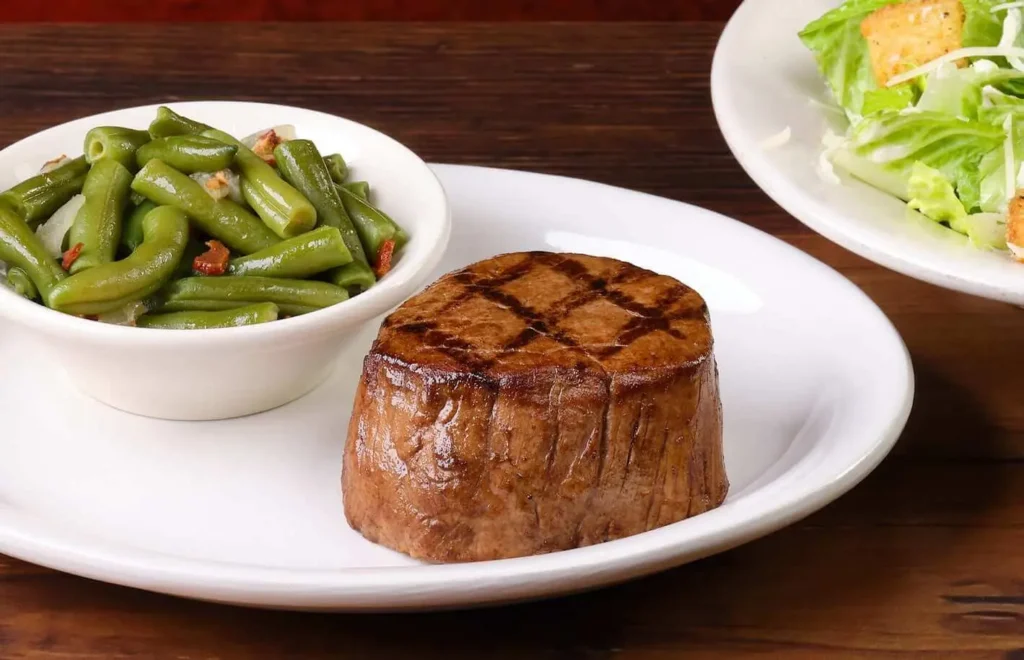
Dallas Filet
- 6oz $21.99 | 270 Cal
- 8oz $24.99 | 360Cal
Sizes & Calories
Although the Dallas Filet is lean, its caloric content varies slightly by source and serving size. A fan guide lists the 6 oz portion at roughly 230–270 calories, while another menu resource lists 450 calories for the same steak. Differences likely reflect side selections and seasoning; the tenderloin itself remains relatively low‑fat. A 2026 menu update notes that the 8 oz filet clocks in around 360 calories. To help you quickly compare, here’s a summary:
| Size | Calories (approx.) | Description |
|---|---|---|
| 6 oz | 230–270 cal or around 450 cal | Leanest option with a meltingly tender texture; great for lighter appetites. |
| 8 oz | 360 cal | Larger portion with the same tenderness; a filling meal without heavy fat. |
These figures are only for the steak; sides like mashed potatoes, baked potatoes or buttered corn will add additional calories. Because the filet is so lean, diners following low‑carb or high‑protein diets often choose it.
Price Analysis for 2026
Texas Roadhouse doesn’t post prices on its official website, so we pulled data from multiple menu guides and media articles to establish a national 2026 price range. As with other steaks, prices can vary by 10 % or more depending on location. Here’s what we found:
| Cut & Serving | Price Range (USD) | Sources & Notes |
|---|---|---|
| Dallas Filet 6 oz | $21.99 – $26.99 | A 2026 menu guide lists the 6 oz filet at $21.99, while another fan site lists $26.99. A Tasting Table comparison reports the 6 oz filet at $25.49. |
| Dallas Filet 8 oz | $24.99 – $29.49 | The same 2026 menu guide cites $24.99 for the 8 oz cut. Chowhound’s steak ranking notes the 8 oz filet costs $28.99, while Tasting Table says it runs $29.49. |
| Filet 6 oz & Ribs Combo | $23.99 – $31.99 | Combination meals pair a 6 oz filet with BBQ ribs or grilled shrimp. Menu sources show prices such as $23.99 for the filet & ribs combo and $31.99 for filet & grilled shrimp. |
As you can see, the Dallas Filet is one of the priciest cuts per ounce at Texas Roadhouse. However, every steak comes with two made‑from‑scratch sides and unlimited rolls, which adds value.
Flavor & Value Review
Expert Reviews
Reviews consistently highlight the Dallas Filet’s tenderness and presentation. Eat This, Not That food writer Jess Kelly ordered the 6 oz filet and described it as “a tender fillet cooked perfectly for $25.49” with nice grill marks. She praised the seasoning—enough salt to build a crust—and said the steak arrived rare as requested, making it a lean yet satisfying meal. Because the steak has little marbling, she noted that some diners might prefer ribeyes for a richer flavor but still found the filet delicious.
In a comparison between Texas Roadhouse and Outback Steakhouse, Tasting Table reported that the 6‑ounce Dallas Filet costs about $25.49 and the 8‑ounce costs $29.49, concluding that Texas Roadhouse offers a better value because diners receive two sides and unlimited rolls. The article noted that while Outback’s filet is pricier, Texas Roadhouse’s version delivers comparable tenderness and quality.
Chowhound ranked the Dallas Filet as the second‑best steak at Texas Roadhouse, describing it as “pricey but one of the most tender options on the menu”. The reviewer emphasised that the steak comes from the tenderloin section, making it soft enough to cut with a fork. They noted that the 6‑ounce filet cost $24.99 and the 8‑ounce $28.99, and pointed out that the filet’s thickness gives it a better meat‑to‑crust ratio than thinner steaks.
Taste & Texture
While expert opinions differ on whether the Dallas Filet is the absolute best steak at Texas Roadhouse, all agree on a few points:
- Tenderness: Because it’s cut from the tenderloin and aged 21 days, the Dallas Filet is extremely soft. The meat yields easily with a knife and even the thicker 8 oz portion remains fork‑tender.
- Lean profile: With very little fat and a mild beef flavor, the filet appeals to those who prefer a cleaner, less greasy steak. Some reviewers prefer ribeyes or strips for deeper beefiness and marbling, but the filet’s lean quality fits low‑fat diets.
- Char and seasoning: The open‑flame grilling imparts grill marks and a subtle char. Asking for medium rare or medium allows the interior to stay pink while the exterior develops a savory crust. If you like bolder flavors, request extra seasoning or add sautéed mushrooms or onions to enhance umami.
Dallas Filet vs. Other Steaks
Choosing the right steak comes down to your priorities: tenderness, flavor, fat content and price. Texas Roadhouse’s menu comparison table lists the Dallas Filet as extremely tender with low fat and mild beef flavor, making it ideal for diners seeking softness and a clean taste. By contrast, the Ft. Worth ribeye has abundant marbling and bold beef taste, while the sirloin is firmer and more affordable. The New York strip sits between these extremes, offering moderate marbling and a strong beef‑forward flavor.
From a price perspective, the Dallas Filet is costlier per ounce than the sirloin or New York strip but slightly less than the bone‑in ribeye. However, its premium cost reflects its tenderness and the aging process. Chowhound notes that the filet “is the most expensive cut per ounce” but still praises it for its texture and thickness. Meanwhile, Eat This reviewers ranked the bone‑in ribeye slightly higher due to its rich marbling and bold flavor, but they still considered the Dallas Filet a delicious lean alternative.
How to Order & Customize
To get the most out of your Dallas Filet, consider these ordering tips:
- Choose the right doneness. Medium rare to medium maximizes tenderness and keeps the center pink, while still allowing a good sear. Rare works for those who like a cool center, but well‑done can dry out the lean tenderloin.
- Customize your seasoning. If you enjoy bolder flavors, ask your server for extra seasoning or order sautéed mushrooms and onions on top. The chain’s signature spice blend includes garlic and pepper; extra salt and herbs enhance the mild meat.
- Select complementary sides. Loaded baked potatoes, seasoned rice, buttered corn or steamed vegetables add variety and texture. To keep the meal low‑carb, pick broccoli or salad.
- Try combos carefully. Pairing the filet with ribs or shrimp offers variety and can be good value. Just note that some combos cost almost as much as ordering the steak alone, so evaluate whether you want the extra protein.
- Ask about specials. Occasionally restaurants may offer limited‑time flavors, like garlic butter or bourbon glaze. If you like experimenting, ask your server.
Money‑Saving Tips
Even though the Dallas Filet is one of the pricier steaks, you can still enjoy it without overspending:
- Early dine specials: Texas Roadhouse offers early dine dinners around Monday–Thursday, with select entrées at about $10.99. The Dallas Filet isn’t usually included, but you can order a sirloin or Road Kill steak for a fraction of the cost and still satisfy your steak craving. Use early dine days to test sides or appetizers, then return for the filet.
- Share or split. A 6 oz filet may not be enough for two, but you can split an 8 oz steak with appetizers. Alternatively, order a combo (filet with ribs or shrimp) and share the extras.
- Join the VIP club. The restaurant’s email club occasionally sends coupons for free appetizers or birthday treats, which offset the cost of your steak. Because menu prices can vary by about 10 %, checking your local menu online may reveal lower prices at a nearby location.
- Consider size vs. value. If you’re on a budget, opt for the 6 oz filet. On a per‑ounce basis, the 8 oz is slightly cheaper, but only if you’ll eat all of it—otherwise you’re paying for leftovers. For even better value, the sirloin offers a hearty steak experience at a lower price point.
2026 News & Trends at Texas Roadhouse
The Dallas Filet remains popular as Texas Roadhouse continues to expand and innovate. In 2026 the company plans to open about 20 new restaurants across the U.S. and internationally. It’s also testing region‑specific cocktails and mocktails to complement its steaks. Behind the scenes, Texas Roadhouse is rolling out digital kitchen systems and Roadhouse Pay tablets nationwide, with around 65 % of restaurants using the technology by mid‑2025. These innovations aim to speed up service and maintain consistency. Company executives have said that keeping menu prices reasonable is a priority despite inflationary pressures, so diners shouldn’t expect big price hikes in 2026.
Frequently Asked Questions
It’s a center‑cut tenderloin steak, the most tender portion of the cow. Texas Roadhouse ages it about 21 days for additional flavor and tenderness.
A 6 oz filet contains approximately 230–270 calories according to a nutrition guide, though some menu listings show 450 calories due to sides. The 8 oz portion is around 360 calories.
Prices vary by location. Generally, the 6 oz filet runs $21.99 to $26.99, while the 8 oz costs $24.99 to $29.49. Combos with ribs or shrimp range from $23.99 to $31.99.
Yes. Thanks to its low fat content and high protein, the filet is a good choice for low‑carb or calorie‑controlled diets. Pair it with steamed vegetables or salad instead of starches.
Filet medallions are smaller pieces of tenderloin (usually 3 oz each) served with rice or mushrooms. The Dallas Filet is a single 6 oz or 8 oz steak. If you prefer variety or want to share, medallions may be a better fit.
Yes. Texas Roadhouse offers the Filet 6 oz with ribs or with grilled shrimp, priced around $23.99–$31.99.
Conclusion
The Dallas Filet stands out at Texas Roadhouse for its unmatched tenderness, lean profile and custom grilling. While it’s the costliest steak per ounce on the menu, you’re paying for a hand‑cut tenderloin aged for 21 days, grilled over an open flame and served with two hearty sides. Across multiple 2026 menu guides, the 6 oz filet ranges from roughly $22 to $27, and the 8 oz from $25 to $30. Reviewers commend its soft texture, proper seasoning and attractive grill marks. Compared with richer ribeyes or more economical sirloins, the Dallas Filet appeals to diners seeking a lean, tender steak with moderate calories and a premium feel. Pair it with your favorite sides, consider splitting a combo for added value, and savor a taste of Texas hospitality.