
If you need to avoid certain ingredients, Texas Roadhouse Allergens can feel tricky at first. The good news is that the restaurant’s public allergen menu and nutrition resources give you a solid starting point. The harder part is knowing which foods are usually simpler, which ones carry hidden risk, and where cross-contact matters more than the menu label.
This guide is built for that exact purpose. Instead of giving vague advice, it focuses on how people actually order at Texas Roadhouse. You will see which menu categories tend to be safer, which items need extra caution, and what to say when you order. That matters because the chain’s hand-cut steaks, made-from-scratch sides, sauces, and busy kitchen setup can change the real risk level of a meal.
Texas Roadhouse also states in its public allergen information that food is prepared in shared cooking and prep areas. In plain terms, that means no menu item should be treated as completely risk-free for a severe allergy. The brand also notes that it cooks with 100 percent refined soybean oil, which the FDA does not classify as a major allergen in the same way as whole soy ingredients. That detail helps, but it does not remove the need to talk with your server.
What Texas Roadhouse Allergens usually covers
When most diners search for Texas Roadhouse Allergens, they want one of two things. First, they want to know whether a specific meal contains dairy, egg, wheat, soy, fish, shellfish, peanuts, tree nuts, or sesame. Second, they want to know whether the kitchen can realistically handle an allergy order with care.
Texas Roadhouse is strongest when you keep the meal simple. Plain grilled proteins and basic sides are usually easier to navigate than breaded appetizers, sandwiches, desserts, or anything covered in sauce. That does not mean every plain item is automatically safe. It means simpler food usually gives you fewer hidden ingredients to manage.
The famous fresh-baked bread and cinnamon butter are also an early decision point. They are part of the Texas Roadhouse experience, but they are not a fit for many allergy-sensitive diners. If wheat, dairy, or egg is a concern, skipping the bread basket is often the cleanest move.
The biggest allergen trouble spots on the menu
The highest-risk part of the Texas Roadhouse menu is usually not the steak itself. It is everything added around it. Marinades, seasoning blends, butter finishes, cheese toppings, brown gravy, cream gravy, croutons, dressings, and fryer cross-contact can all turn a simple order into a risky one.
Appetizers are a common problem area. Fried starters, cheesy dips, and breaded items often combine wheat, dairy, egg, and soy in one order. They also tend to be prepared in the same high-traffic stations, which makes them a weaker choice for anyone with a serious allergy.
Salads can look safe but still hide trouble. A basic House Salad sounds light, yet cheese, egg, croutons, and dressing can each introduce allergens. Caesar Salad brings its own issues through croutons, dairy, and dressing ingredients. If you want a safer salad, you usually need to strip it back and rebuild it carefully.
Desserts are another hard no for many allergy-sensitive diners. Cheesecake, brownies, bread pudding, and apple desserts usually bring multiple allergens at once. They are rarely the best place to negotiate if your goal is a lower-risk meal.
Best approach by menu category
The table below gives a practical view of where diners usually have the best odds of success.
| Menu category | Typical allergen risk | Better approach |
|---|---|---|
| Hand-cut steaks | Moderate | Order plain, ask about seasoning, skip butter and smother toppings |
| Grilled chicken | Moderate | Request no sauce, no butter finish, and confirm marinade details |
| Ribs | Moderate to high | Ask whether sauce or glaze contains soy, wheat, or other allergens |
| Seafood | Moderate to high | Watch for fish or shellfish issues, plus butter or sauce add-ons |
| Salads | Moderate | Remove cheese, egg, croutons, and choose a simple dressing carefully |
| Baked potato and sweet potato | Lower to moderate | Skip butter, cheese, sour cream, gravy, and sweet toppings if needed |
| Steamed vegetables and green beans | Lower to moderate | Ask whether butter or seasoning is added during prep |
| Fried foods | High | Shared fryers and breading make these a weak choice for allergy orders |
| Burgers and sandwiches | High | Buns, cheese, sauces, and sides raise the risk quickly |
| Desserts | High | Multiple allergens are common, so caution is usually best |
This is where your ordering strategy matters. A plain sirloin with a plain baked potato and a plain vegetable side is a much cleaner starting point than Country Fried Steak with mashed potatoes, gravy, and a side salad loaded with toppings. One order asks the kitchen to avoid extra variables. The other creates them.
Texas Roadhouse Allergens in steaks, chicken, and ribs
Steak is usually the smartest place to start. Dallas Filet, sirloin, New York Strip, and Ft. Worth Ribeye are easier to work with when you order them plainly and ask direct questions. The steak itself is not the main issue. The finish, seasoning, butter, and optional toppings are what matter most.
If dairy is your concern, ask for no butter and no cheese topping. If soy or wheat is a concern, ask whether the seasoning blend or marinade contains either one. If your allergy is severe, make it clear that you need the kitchen to treat the order as an allergy meal, not just a preference.
Grilled chicken can also work well, especially if you keep it plain. Herb Crusted Chicken or other chicken specialties may include added ingredients that matter more than the chicken itself. BBQ sauce, mushroom toppings, jack cheese, and buttery finishes all raise the risk.
Ribs are a little less predictable. The meat may be fine for some diners, but the sauce or glaze can introduce soy, wheat, or other allergens depending on the recipe. If you are avoiding a major allergen, ribs are worth an extra question before you commit.
Safer side choices and where people slip up
Sides often decide whether an order stays simple or gets complicated. Baked potatoes, sweet potatoes, applesauce, steamed vegetables, seasoned rice, and green beans can look like smart picks, but toppings and finishing ingredients still matter.
A baked potato becomes a different meal once butter, cheese, sour cream, bacon, or chili goes on top. A sweet potato changes fast when cinnamon butter, caramel sauce, or marshmallows enter the picture. Mashed potatoes can be harder than they look because dairy-based ingredients are common even before toppings.
Steamed vegetables are one of the better choices on paper, especially for wheat-sensitive diners, but you still want to ask whether butter is added during prep. Green beans can also vary in preparation. They may fit some allergy needs, but not all.
One practical rule helps here. If a side tastes creamy, crispy, glazed, or heavily seasoned, treat it as a question mark until confirmed. Plain usually wins.
Dairy-free, gluten-aware, and nut-sensitive ordering tips
Dairy-free diners usually do best with plain steaks, plain grilled chicken, plain baked potatoes, and vegetables ordered without butter. The famous rolls and cinnamon butter are easy to spot, but dairy can also show up in mashed potatoes, salad dressings, cheese toppings, cream gravy, and loaded potato add-ons.
Gluten-aware diners need a stricter filter. Bread, buns, rolls, croutons, breaded appetizers, chicken tenders, country fried items, and many desserts are obvious trouble spots. Less obvious issues include sauces, gravies, seasoning blends, and fryer cross-contact. A simple grilled entrée with unbreaded sides is usually the stronger move, but it still needs confirmation.
Nut-sensitive diners face a different problem at Texas Roadhouse because peanuts are closely tied to the brand experience in many locations. Even if your chosen entrée does not contain peanuts, the dining room and service flow can still be uncomfortable for someone with a severe peanut allergy. That is why this topic is not only about ingredients. It is also about the environment.
Tree nut concerns may show up more often in desserts or specialty items than in basic entrées, but you should still ask. Peanut and tree nut issues are not always handled the same way, so it helps to name the exact allergy rather than saying only “nut allergy.”
Why cross-contact matters more here than at some chains
Many competitor articles stop at listing allergens. That is not enough for a useful guide. The bigger issue at Texas Roadhouse is that even a menu item without a listed allergen may still be prepared in a shared kitchen with contact risks.
Texas Roadhouse says this directly in its public allergen information. Food is prepared in shared cooking and preparation areas, and the company cannot guarantee that any menu item is completely free of allergens. That line matters because diners often confuse “does not contain” with “safe for a severe allergy.” Those are not the same thing.
This is especially important with fried foods, bread service, buttered surfaces, shared utensils, and rush-hour kitchen traffic. If your allergy is mild, you may simply want ingredient guidance. If your allergy is severe, you need both ingredient guidance and a realistic conversation about cross-contact.
That is why timing can help too. Ordering during a slower part of the day may give staff more room to handle your request carefully. It is not a guarantee, but it can improve the odds of a cleaner order.
How to order at Texas Roadhouse without making mistakes
Start by leading with the allergy, not the menu item. Tell the server exactly what you need to avoid before you place the order. That gives the team a chance to flag sauces, sides, toppings, and prep issues early.
Next, build the meal from the center out. Pick a plain protein first. Then choose plain sides. Then ask whether anything in the standard prep adds the allergen you are avoiding. This method works better than ordering a finished entrée and trying to subtract risk afterward.
It also helps to avoid broad questions like “What can I eat here?” A better question is “Can I get a plain sirloin with no butter, a baked potato with nothing on it, and steamed vegetables prepared without butter, and can you mark it as an allergy order?” That is easier for staff to answer accurately.
If the answer feels uncertain, switch to something simpler. The best allergy order is usually not the most exciting one. It is the one with the fewest variables between the grill and your plate.
Best practical meal ideas for allergy-conscious diners
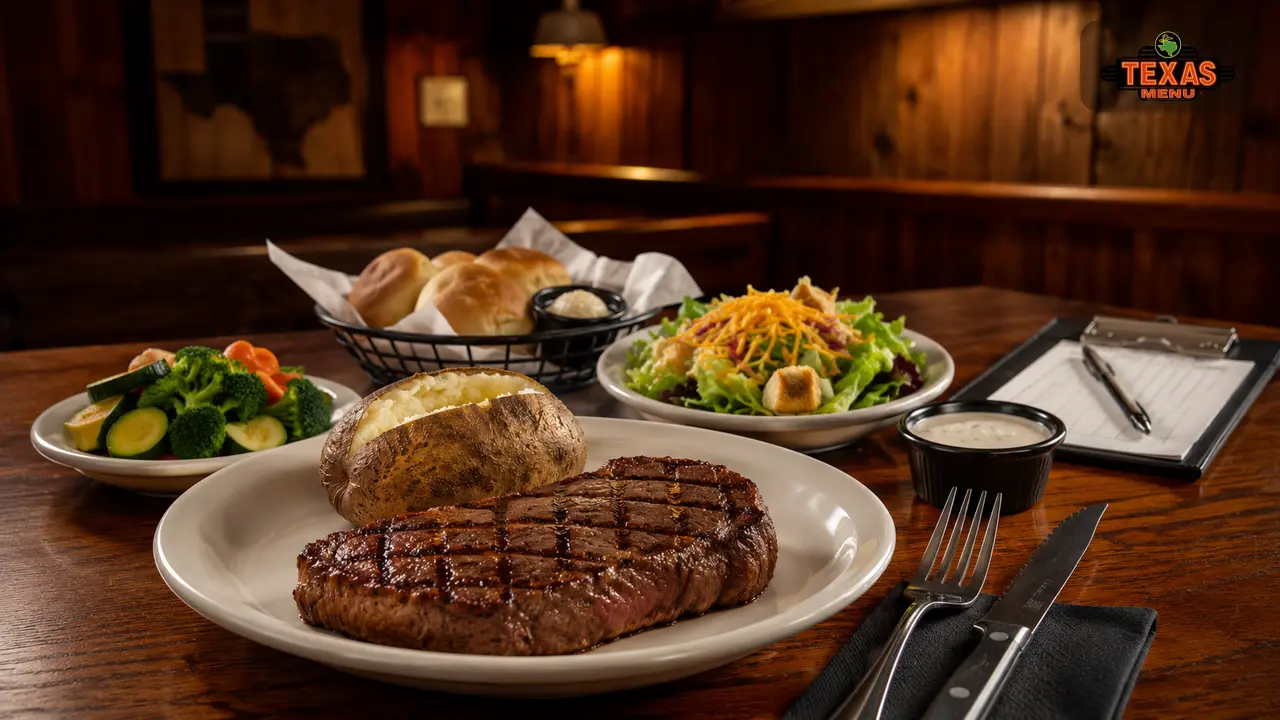
A plain sirloin with a plain baked potato and steamed vegetables is one of the cleanest starting combinations. It is simple, filling, and easier to customize than most combo meals or fully dressed entrées.
A plain grilled chicken breast with applesauce and a plain side salad can also work for some diners, especially if they remove cheese, egg, croutons, and risky dressing choices. The same logic applies to a steakhouse-style meal built from basic proteins and plain sides.
For families, kids’ grilled chicken or simple steak bites may be easier to manage than breaded kids’ meals, but parents still need to confirm preparation details. The kids menu is not automatically safer just because portions are smaller.
If your table is ordering appetizers for sharing, it may also help to keep your own meal separate from those shared plates. That is a practical step many weak guides skip, but it matters in real dining situations.
FAQs
Yes, Texas Roadhouse provides public allergen information through its nutrition resources. Even so, the company also warns that items are prepared in shared areas, so diners should still tell the restaurant about any allergy before ordering.
The safest starting point is usually a plain grilled protein with plain sides. A simple sirloin or grilled chicken with a plain baked potato and vegetables is often easier to manage than fried, sauced, or heavily customized dishes.
For many people, no. The fresh-baked rolls and cinnamon butter are usually a poor fit for diners avoiding wheat, dairy, or egg, so they are often one of the first items to skip.
No, you should not assume that. Peanuts are part of the restaurant environment in many locations, so people with a severe peanut allergy should be especially cautious and speak with the restaurant before dining.
They may be able to reduce risk, but they do not guarantee any item is completely free of allergens. That is why simple orders, clear communication, and realistic expectations matter so much here.
Final takeaway
Texas Roadhouse Allergens are manageable for many diners, but only if you order with a plan. The strongest strategy is simple: choose plain proteins, keep sides basic, question sauces and toppings, and tell the staff about your allergy before the order starts. That approach gives you a much better shot than trying to decode a fully loaded entrée at the table.
If you want the classic steakhouse experience with the least friction, a plain hand-cut steak or grilled chicken with carefully chosen sides is usually the smartest path. Check the current allergen information, ask direct questions, and build the meal around what the kitchen can prepare clearly and confidently.
Check Also: Texas Roadhouse Low Calorie Meals — Best Choices